Bridging Stage and Studio: A Conversation with Ildikó Szabó
"An artist who performs at her absolute best in front of an audience."
Iván Fischer described Ildikó Szabó as an artist who performs at her absolute best in front of an audience.
Few musicians embody the natural dialogue between performing and teaching as convincingly as Ildikó. Praised early in her career by the legendary János Starker, she has built an international presence as a soloist while simultaneously dedicating herself to shaping the next generation of cellists as professor and lecturer in Weimar and Berlin.
Her artistry carries the imprint of remarkable pedagogical lineages — from László Mező and Starker to Jens Peter Maintz and Wolfgang Emanuel Schmidt — yet her own voice as a teacher is distinctly personal and forward-looking.
In this conversation, we explore the profound connection between stage experience and pedagogy: How do different teaching traditions inform her work today? What does she listen for when meeting a new student? How can young cellists balance technical security with authentic self-expression? And what lies at the heart of true sound production?
A thoughtful and inspiring dialogue on craft, discipline, and artistic identity.
Topics:
00'02 You studied with several towering pedagogues—from László Mező and János Starker to Jens Peter Maintz and Wolfgang Emanuel Schmidt.
How have these different teaching traditions shaped the way you teach today?
05'42 What do you think of International Competitions?
Subtitles available in English
Competition, Practice & Long-Term Artistic Growth
An international career demands more than brilliance in the spotlight — it requires depth, discipline, and a long-term vision of artistic development. Widely praised for her impeccable technique and warm, flexible sound, Ildikó represents a rare balance between precision and expressive freedom.
In this part of our conversation, we explore the realities behind competition and career building: How does she teach sound production beyond mechanical instruction? What technical misconceptions hold advanced students back? And how has her own approach to practice evolved while balancing an international performing career with professorship?
A focused look at technique not as an end in itself — but as the foundation for lasting artistic identity.
Subtitles available in English
Performing, Presence & The Art of Collaboration
Described by Iván Fischer as an artist who performs at her absolute best in front of an audience, Ildikó brings an exceptional intensity and clarity to the stage. A laureate of sixteen international competitions — including eight prizes at the Pablo Casals Cello Competition — she understands both the pressure and the privilege of performing at the highest level.
In this part of our conversation, we turn to the psychology of performance and the craft behind it: How does she prepare mentally for the stage? Can performance readiness be taught? How do students bridge the gap between studio excellence and stage presence? And what does it truly mean to take artistic risks?
As lecturer at the Julius-Stern-Institute (UdK Berlin) and associate professor for chamber music at the University of Music Franz Liszt Weimar, she also reflects on collaboration and the often underestimated skills that define great chamber musicianship.
An insightful exploration of presence, partnership, and the courage to communicate.
Subtitles available in English
Ildikó Szabó
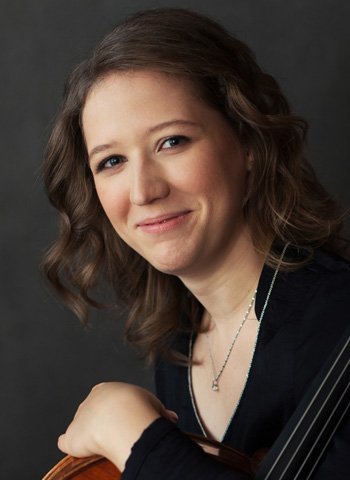
Ildikó is an associate professor of chamber music at the University of Music Franz Liszt Weimar and a lecturer in cello at the Julius-Stern-Institute - UdK Berlin. She has been actively involved in educational and outreach projects such as TONALi's school concerts and the Konzerthaus Dortmund's Community Music. Ildikó is a Larsen Strings artist.
Described by János Starker as “an exceptionally gifted young cellist” with world-career potential, Ildikó Szabó has since established herself as one of Hungary’s leading international artists. She is a prizewinner of 16 international competitions, including eight awards at the Pablo Casals Cello Competition (2014).
She has appeared as a soloist with the Budapest Festival Orchestra under Iván Fischer, Concerto Budapest, the Chamber Orchestra of Europe, and other major ensembles, performing at venues such as the Wigmore Hall, Elbphilharmonie, Concertgebouw Amsterdam, Mariinsky Theatre, and Walt Disney Hall.
A graduate of the Liszt Academy, Berlin University of the Arts, Hochschule für Musik Franz Liszt Weimar, and the Kronberg Academy, she is praised for her impeccable technique and warm, flexible sound. Her recordings include Heritage (2020), nominated for the German Record Critics’ Award, and the complete Beethoven cello and piano works (2023), nominated for the ICMA Awards.
Since 2023, she has served as an Associate Professor of Chamber Music in Weimar and a Lecturer in Cello at the Julius-Stern-Institute (UdK Berlin). She is a Larsen Strings artist.
More on her website
Coming Next: Interview on iClassicals
Matthias Kadar, author of "Antonio Salieri: Die unsichtbare Präsenz (The Invisible Presence)"